Piastri's Melbourne Crash: Unexpected Power Unit Blamed in Shocking Pre-Race Drama
The roar of the crowd, the anticipation building, the distinct smell of race fuel – these are the hallmarks of any Grand Prix, especially a home race. For Australian sensation Oscar Piastri, the 2026 Melbourne race promised a hero's welcome and a strong start to his season. However, what unfolded just moments before the lights went out sent shockwaves through the paddock and left fans aghast. A seemingly innocuous pre-race incident saw Piastri's car crippled, ruling him out of his home Grand Prix. While initial reactions pointed to a simple driver error or cold tyres, Piastri's candid reflections revealed a far more complex and unexpected culprit: a momentary surge of power from his advanced power unit, transforming a routine manoeuvre into a catastrophic
Melbourne race incident.
The Melbourne Mishap: A Home Hero's Heartbreak
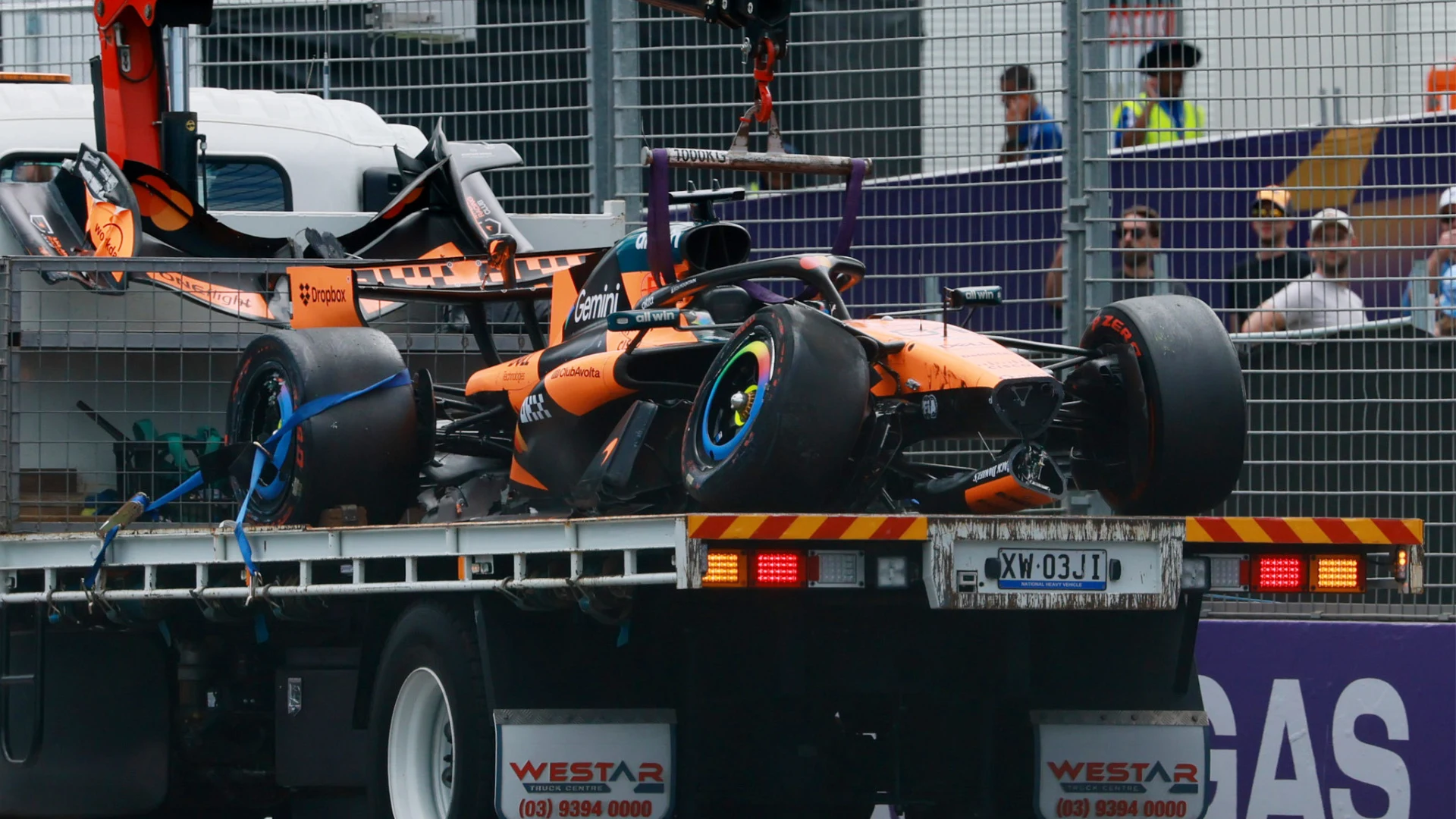
The scene was set for a record-breaking weekend, with nearly half a million fans flocking to Albert Park. Piastri, a local favorite, was making his way to the grid, a standard procedure before any race. Exiting Turn 4, a corner he had navigated countless times throughout practice and qualifying, his McLaren suddenly lost traction. The car spun into the barrier, sustaining significant damage that rendered it impossible to start the race.
The disappointment was palpable. For Piastri, missing his home Grand Prix in front of such a passionate crowd was a devastating blow. The frustration was evident in his post-incident remarks. "Just obviously disappointed, a scenario like that just shouldn’t happen," he stated, reflecting the universal sentiment of his team and supporters. On the surface, it appeared to be a low-speed, avoidable error. But beneath the immediate visual evidence lay a layer of technical complexity that highlighted the intricate dance between driver and machine in modern Formula 1.
More Than Just Cold Tyres: The Power Unit Revelation
While Piastri readily admitted to bearing a "significant share of the blame," acknowledging factors like cold tyres, his explanation went much deeper. He clarified that the incident wasn't solely due to a misjudgement or an optimistic approach to the kerb. The critical revelation was the unexpected activation of an additional 100 kilowatts of power – a surge he simply wasn't anticipating at that precise moment.
"At the same time, I had about 100 kilowatts extra power that I didn't expect, which is not insignificant," Piastri explained. This sudden, uncommanded burst of power, equivalent to roughly 134 horsepower, drastically altered the car's behaviour, especially on already cold tyres and at a delicate point in the corner. What made it particularly frustrating for Piastri was that it wasn't a malfunction, but "a function of how the engines have to work with the rules." This subtle yet powerful interaction between sophisticated hybrid technology and regulatory frameworks created a perfect storm, transforming a standard procedure into a high-profile
Melbourne race incident.
Unpacking the "Unexpected Power": How Modern F1 Engines Operate
To truly grasp Piastri's predicament, it's essential to understand the intricate nature of modern Formula 1 power units. These are not just internal combustion engines (ICE); they are highly complex hybrid systems that integrate the ICE with multiple Motor Generator Units (MGU-K, MGU-H) and energy storage systems (batteries). The rules governing energy recovery and deployment are stringent, designed to promote efficiency and performance within strict limits.
*
Energy Recovery: MGUs capture kinetic energy during braking (MGU-K) and heat energy from exhaust gases (MGU-H), converting it into electrical energy stored in the battery.
*
Energy Deployment: This stored energy can then be deployed to assist the ICE, providing additional horsepower at specific points on the track, typically for acceleration or overtaking.
*
Complex Algorithms: Teams use sophisticated software and algorithms to manage this energy flow, constantly optimizing for performance, fuel economy, and reliability. This management is dynamic, changing based on driver input, track conditions, and race strategy.
Piastri's experience points to a momentary discrepancy in this complex energy management. During low-speed, pre-race conditions, the engine's software might have triggered an unexpected deployment of electrical energy, perhaps due to a specific engine mode, a combination of MGU activity, or a sensitivity to driver input on cold tyres. While "working normally" within the system's parameters, this deployment was unpredicted by the driver at that critical juncture, proving the fine line between optimal performance and potential peril. The challenge for teams and drivers lies in understanding and anticipating every nuance of these hyper-complex systems, especially in non-racing conditions.
The Impact on Piastri and McLaren
The immediate consequence of this
Melbourne race incident was a DNF for Piastri before the race even began. Beyond the emotional blow of missing his home Grand Prix, this also meant zero points for the championship – a significant setback so early in the season. For McLaren, it represented damaged equipment, a logistical headache, and a missed opportunity to score valuable constructor points. The incident serves as a stark reminder that in Formula 1, the race starts long before the red lights go out, and unforeseen technical quirks can have profound consequences. It also highlighted the immense pressure on young drivers to master not just the physical demands of racing, but also the intricate digital and mechanical ecosystem of their vehicles.
A Weekend of Incidents: Melbourne's Broader Racing Drama
While Piastri's pre-race exit was a devastating individual blow, the broader Melbourne race weekend was unfortunately punctuated by a series of dramatic incidents across various categories. The Albert Park circuit, known for its challenging layout, certainly delivered its share of unexpected twists and turns beyond the F1 paddock.
The Supercars Championship, a staple of the Australian motorsport scene, also experienced significant chaos. Drivers like Will Brown and Ryan Wood found themselves embroiled in multiple clashes and subsequent penalties, highlighting the relentless competition and tight margins at play. Brown's championship hopes took a substantial hit after a series of incidents, including a three-wide run to Turn 11 and a later collision while disputing fourth place. Similarly, Ryan Wood received a hefty 30-second penalty after an incident that sent another competitor into the barriers. Even championship leader Matt Payne faced a dramatic downfall, crashing out on Lap 1 from the lead. These events underscore that the unpredictability of motorsport isn't confined to a single category or driver; it's an inherent part of the high-stakes environment. For more details on the Supercars controversies, you can read about the
Melbourne Supercars Chaos: Brown & Wood Hit With Penalties and delve into the wider
Melbourne Race Mayhem: Collisions, Penalties & Championship Shocks that gripped the circuit. These incidents collectively contributed to a weekend of intense racing action and surprising outcomes for fans.
Lessons Learned and Moving Forward
The Piastri
Melbourne race incident, while frustrating, offers valuable lessons for drivers, teams, and the sport as a whole.
*
Driver Adaptation: Modern F1 demands an unprecedented level of understanding from drivers. Beyond raw talent, they must develop an intuitive feel for their car's complex hybrid systems, anticipating even subtle changes in power delivery. This requires extensive simulator work and meticulous data analysis.
*
Team Optimisation: Engineering teams must continuously refine their power unit management software, aiming for greater predictability and transparency in power deployment, even in non-race conditions. The goal is to ensure that "normal operation" aligns perfectly with driver expectation across all scenarios.
*
Regulatory Review: While current rules are designed to push technological boundaries, incidents like this might prompt a re-evaluation of how unexpected power surges are managed or communicated to drivers, especially in safety-critical situations.
*
Pre-Race Protocols: Perhaps stricter pre-race warm-up procedures or designated low-power modes for grid-entry laps could mitigate such risks in the future.
This unexpected power unit quirk highlights the razor-thin margins in F1, where a fraction of a second or a momentary surge can dictate success or failure. It’s a testament to the ongoing evolution of racing technology and the continuous challenge of taming these sophisticated beasts.
The 2026 Melbourne race will forever be etched in Oscar Piastri's memory, not for a glorious finish, but for a confounding pre-race exit blamed on an unexpected surge from his cutting-edge power unit. This unique
Melbourne race incident underscored the immense complexity of modern Formula 1, where the boundaries of human control and technological sophistication are constantly tested. While personally devastating, it provides a crucial learning opportunity for Piastri, McLaren, and potentially the wider motorsport community, as they strive to harness the full potential of these incredible machines without sacrificing predictability or safety. The journey for redemption begins with a deeper understanding of these high-tech marvels.